

Amrita Devi Earth Care
Amrita Devi Earth Care (ADEC) is the environmental sustainability wing of Amrita Devi Foundation (ADF), working at the intersection of ecological restoration, climate action, and community livelihood generation. Our approach goes beyond plantation drives—we focus on long-term survival of trees, biodiversity conservation, and creating sustainable income opportunities for local communities, especially in rural and hill regions.

Vision & Mission
Creating a sustainable future in India by nurturing the environment, empowering local communities with employment opportunities, and promoting the health and wellbeing of all villagers. We support the following SDG goals under Amrita Devi Earth Care.
-
GOAL 13- Climate Action
-
GOAL 15- Life on Land
-
GOAL 8- Decent Work and Economic Growth
We have three initiatives under Amrita Devi Earth Care:
-
Plantation / Afforestation
-
Smokeless Chulha
-
Swachh Bharat Abhiyan

Afforestration/Plantation
Our Approach
At Amrita Devi Earth Care, plantation is not treated as a one-day activity. We focus on:
-
Site assessment and species selection
-
Plantation with host plants where required
-
Regular monitoring, watering, fencing, and replacement
-
Community involvement and ownership
Work Done So Far
-
1,500+ trees planted across Uttarakhand and Delhi NCR
-
1,000 sandalwood trees planted in Uttarakhand, along with suitable host plants
-
500 native trees planted in the Aravalli Hills (Delhi NCR) in collaboration with corporate and environmental partners
-
Plantation includes 20+ native species, supporting local biodiversity
Why Sandalwood & Native Species?
Sandalwood provides long-term economic returns to farmers and communities. Native species improve soil health, groundwater recharge, and biodiversity. Trees act as carbon sinks, combating climate change. Economic Impact on Communities. Local villagers are engaged in plantation, maintenance, and protection. Long-term income potential from sandalwood and allied species. Skill development in sustainable forestry practices. Reduced distress migration by creating nature-based livelihoods.
Environmental Benefits
Carbon sequestration and climate regulation. Restoration of degraded lands. Prevention of soil erosion and floods. Improved air quality and micro-climate balance.
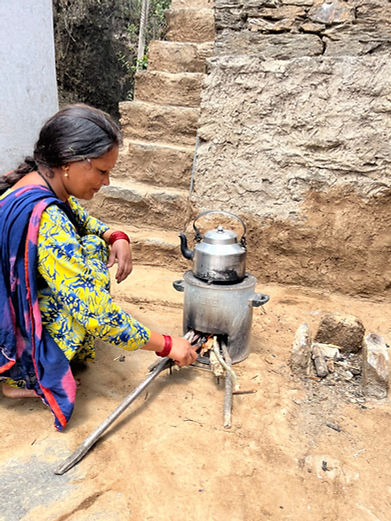
Smokeless Chulha Distribution Initiative
Traditional cooking methods using firewood expose women and children to severe indoor air pollution and contribute to deforestation. Amrita Devi Earth Care addresses this issue by distributing smokeless, fuel-efficient chulhas in rural and hilly areas.
Work Done So Far
-
130+ smokeless chulhas distributed in Uttarakhand villages
-
Beneficiaries include women-led households and marginalized families
-
Community awareness sessions conducted on usage and benefits
Health & Social Benefits
Significant reduction in respiratory diseases. Improved eye health for women and children.
Reduced cooking time and physical strain. Safer indoor environments
Environmental Benefits
Reduced firewood consumption. Lower deforestation pressure. Reduced carbon emissions. Conservation of local forest resources.
Economic Benefits
Savings on fuel costs. Less time spent collecting firewood. Improved productivity and quality of life for women.

Corporate Swachh Bharat Abhiyan
Urban public spaces often face challenges of waste accumulation and lack of community participation in maintaining cleanliness. Through the Corporate Swachh Bharat Abhiyan Employee Volunteering Campaign, Amrita Devi Foundation, in partnership with OnGrid, aims to engage responsible organizations in creating visible cleanliness impact across Delhi NCR.
This initiative encourages corporate employees to actively participate in structured cleanliness drives near their workplaces or nearby public spaces, contributing to the vision of a cleaner and healthier India.
Program Structure
-
Corporate employee volunteering drives organized across Delhi NCR
-
20–50 employee volunteers participating in each drive
-
60–90 minute structured cleanliness drives near offices or nearby public areas
-
Complete planning, coordination, and on-ground execution by Amrita Devi Foundation
Community & Social Impact
-
Improved cleanliness and hygiene in public spaces.
-
Encourages community participation in maintaining clean surroundings.
-
Promotes responsible waste disposal and environmental awareness.
-
Supports the vision of a cleaner and healthier India.
Corporate Engagement Benefits
-
High employee engagement and team bonding through volunteering.
-
Sense of pride among employees through meaningful social contribution.
-
Visible on-ground impact created by participating organizations.
-
Strong employer branding and social visibility on platforms like LinkedIn.
Campaign Highlights
-
Co-branded banners and visibility during the drive.
-
Structured and safe volunteering experience for employees.
-
Professional event photos and documentation.
-
Participation data and post-event impact report shared with organizations.
Our Long-Term Commitment
Amrita Devi Earth Care is committed to building a future where environmental protection becomes a source of dignity, income, and well-being for communities. By integrating ecology with economy, we ensure that sustainability is not just preserved—but lived and sustained by the people.