

Plantation of 500 Native Trees in Aravalli Hills in Delhi NCR (February 2025 – March 2025)
Greening the Aravalli : A Sustainable Initiative by Amrita Devi Foundation, SHARP Business Systems (India) Pvt. Ltd., and Save Aravalli
This joint initiative focused on planting 500 native and ecologically significant trees across 20 diverse species in the Aravalli Hills, one of India’s oldest mountain ranges and a vital ecological buffer for Delhi NCR. Conducted from February to March 2025, The plantation drive was designed to combat desertification, restore biodiversity, and improve the deteriorating air quality of Delhi NCR.The selected species were chosen for their ecological significance,adaptability to the local environment.
As part of the collaborative effort, SHARP Business Systems (India) Pvt. Ltd. has kindly committed to maintaining the planted saplings for a minimum of one year, which is crucial for their survival and establishment in the Aravalli landscape. We sincerely appreciate this support and express our hope to extend this maintenance commitment to two full years, ensuring stronger root development and long-term ecological impact.
To facilitate planning and continued success, Amrita Devi Foundation will be sharing a detailed budget proposal for the financial year 2025–26 by the end of April 2025. We look forward to SHARP’s continued partnership and support in strengthening this green initiative in the coming year.
Key Collaborators:
Amrita Devi Foundation: Project execution and community engagement.
SHARP Business Systems (India) Pvt. Ltd.: Corporate CSR sponsor.
Save Aravalli Trust: Site support, monitoring, and local outreach.
Project Objectives
Restore degraded Aravalli landscapes through native plantations.
Increase green cover to combat air pollution in Delhi NCR.
Promote biodiversity by reintroducing medicinal and ecological trees.
Encourage community participation and corporate engagement.
Detailed Report
Details and Importance of Plantation in Aravalli Hills
I. Introduction to Aravalli Hills
The Aravalli Hills, dating back 3.2 billion years, are among the oldest mountain ranges in the world. Stretching over 700 kilometers from Gujarat through Rajasthan to Haryana and Delhi, they are the primary ecological barrier that protects northern India, especially the National Capital Region (NCR), from desertification and climate extremes.
In recent decades, this ancient range has faced immense degradation due to:
Illegal mining
Urbanization
Deforestation
Encroachments
This has led to severe ecological imbalances, including:
Rising air pollution
Falling groundwater tables
Loss of biodiversity
Increased soil erosion and heat island effects
II. Why Plantation in Aravalli Hills Is Critically Important
1. Air Purification and Pollution Control
The Aravalli are considered the green lungs of Delhi NCR. Native trees like Peepal, Bargad, and Pilkhan absorb harmful pollutants (like PM2.5, SOx, and NOx) and release oxygen, significantly improving air quality in one of the most polluted regions in the world.
2. Groundwater Recharge and Water Security
The forested hills act as a natural sponge, absorbing monsoon rain and slowly releasing it into underground aquifers. With declining water tables across Gurgaon, Faridabad, and Delhi, reforesting Aravalli is essential for long-term water sustainability.
3. Biodiversity Conservation
Aravalli forests are home to leopards, nilgais, jackals, wild boars, peacocks, and hundreds of native flora and fauna. Plantation of indigenous tree species ensures the revival of ecosystems and pollinator populations essential for agriculture and food security.
4. Barrier Against Desertification
The Aravalli protect NCR from the expansion of the Thar Desert. Their forest cover acts as a natural barrier against the hot, dry winds that accelerate land degradation. Plantation helps preserve soil moisture and combats desert creep.
5. Climate Resilience and Heat Reduction
Plantation increases tree canopy cover, reducing the urban heat island effect and creating microclimates that stabilize temperature extremes. This directly contributes to climate change adaptation in urban and peri-urban areas.
6. Cultural and Medicinal Value
Many native species like Bel, Amla, Imli, Kachnaar, and Harshingar are deeply rooted in Ayurveda and Indian traditions. Their plantation helps revive ethnobotanical knowledge and offers opportunities for community-led herbal entrepreneurship.
7. Community Empowerment and Green Livelihoods
Tree plantation initiatives also offer employment opportunities, skill-building, and environmental stewardship for local communities, including youth and women. It inspires a green movement with active citizen participation in environmental restoration.
III. Why Native Species Matter
Planting native trees is vital for long-term sustainability. These species:
Are drought resistant and require minimal maintenance.
Are adapted to the local soil and climate.
Support local biodiversity, including birds, bees, and butterflies.
Improve soil health and fertility through natural processes.
Species planted include:
Ficus species (Pilkhan, Peepal, Bargad): Top oxygen producers and natural air filters.
Dalbergia, Albizia, Bombax: Soil strengtheners and pollinator attractors.
Medicinal trees like Amla, Bel, and Moringa
IV. Long-Term Goals of Plantation in Aravallis
Restore 20,000+ hectares of degraded land by 2030.
Build a green buffer zone around Delhi to counter pollution and dust storms.
Promote eco-tourism and nature education.
Amrita Devi Foundation’s Vision for the Plantation Initiative
At Amrita Devi Foundation, we believe that environmental restoration is not just an act of planting trees, but a commitment to restoring ecosystems, empowering communities, and creating a greener future for generations to come. Our plantation initiative in the Aravalli Hills represents this very commitment.
Our Vision
To revive and protect the ecological integrity of the Aravalli Hills through community-led, sustainable, and native-species-based plantation efforts that support biodiversity, combat desertification, improve air and water quality, and build climate resilience across Delhi NCR.
Key Pillars of Our Vision
1. Ecological Restoration
We aim to rejuvenate the ancient and endangered Aravalli range by:
Planted 500+ native and medicinal trees to restore green cover,
Enhancing soil fertility and groundwater recharge,
Supporting natural wildlife habitats.
This is not just an act of afforestation — it is the revival of a living ecosystem that plays a crucial role in Delhi NCR's environmental health.
2. Community Empowerment
We believe real change comes from the grassroots.
Our approach includes:
Involving local residents, youth, and volunteers in plantation drives,
Creating opportunities for green livelihoods through maintenance and eco-awareness activities,
Promoting environmental education and a culture of collective responsibility.
Each plantation site becomes a center for community engagement and environmental learning.
3. Climate Action and Sustainability
The Aravalli plantation initiative is a part of our broader mission to address climate change. Through this project, we aim to:
Reduce pollution and mitigate urban heat,
Create carbon sinks through long-term tree survival,
Align with SDG 13 (Climate Action)* and SDG 15 (Life on Land).
Our plantations are designed to become self-sustaining green lungs for future generations.
"We plant not just trees, but a vision — of a resilient, breathable, and biodiverse Delhi NCR."
Project Duration
Start Date: February 1, 2025
End Date: March 31, 2025
Plantation Details (Species and Benefits)
S.NO. | Plant Name | Common Benefits | Images |
1. | Pilkhan (Ficus virens) | A fast growing deciduous tree known for its extensive canopy and Enhances air purification and soil binding |  |
2. | Peepal (Ficus religiosa) | Emits oxygen 24x7, holds religious & ecological value |  |
3. | Sehjan (Moringa oleifera) | Also known as drumstick tree,Nutrient-rich, improves soil fertility |  |
4. | Dhaak/Palash (Butea monosperma) | Recognized for its vibrant orange flowers and Restores forest ecology, host for lac insects and support pollinators and enrich soil fertility. |  |
5. | Desi Papri (Holoptelea integrifolia) | A deciduous tree supports biodiversity and provides medicinal benefits. |  |
6. | Amaltash (Cassia fistula) | Known as the golden shower tree, bright yellow flowers attract pollinators. |  |
7. | Beri (Ziziphus mauritiania) | Drought resistant, supports bird and animal species and serves as a host plant for various butterfly species. |  |
8. | Shisham (Dalbergia sissoo) | Valued for its durable timber and plays a role in nitrogen fixation. Hardwood,and helps in erosion control |  |
9. | Siras (Albizia lebbeck) | A fast growing Shade tree enhances micro-climate and beneficial for reforestation efforts. |  |
10. | Semal (Bombax ceiba) | Holds water in roots, boosts groundwater recharge |  |
11. | Bel Patthar (Aegle marmelos) | Sacred in Indian tradition, Medicinal uses, promotes bee population |  |
12. | Bargad (Banyan)(Ficus benghalensis) | Large canopy, oxygen-rich, microhabitat provider |  |
13. | Gullar (Ficus racemosa) | Improves soil fertility and is pollinator-friendly |  |
14. | Anjeer (Ficus carica) | Fruit-bearing, improves food web dynamics and contributes in both ecological and economical benefits. |  |
15. | Amla (Phyllanthus emblica) | The Indian gooseberry tree, High Vitamin C fruit, Ayurvedic relevance and antioxidant properties. |  |
16. | Harsingaar (Nyctanthes arbor- tristis) | Night-blooming flower, enhances aesthetics and ecology |  |
17. | Kachnaar (Bauhinia variegata) | Ornamental tree having Edible flowers, boosts local herbal ecosystems |  |
18. | Imli (Tamarindus indica) | Produces tangy fruits used in culinary dishes and a shade tree, supports soil conservation |  |
19. | Karonda (Carissa carandas) | Thorny shrub for boundary and protection |  |
20. | Mehndi (Lawsonia inermis) | Soil binder, used in traditional and medicinal applications |  |
Pictures of Plantation
Phase 1 - Pre-Plantation
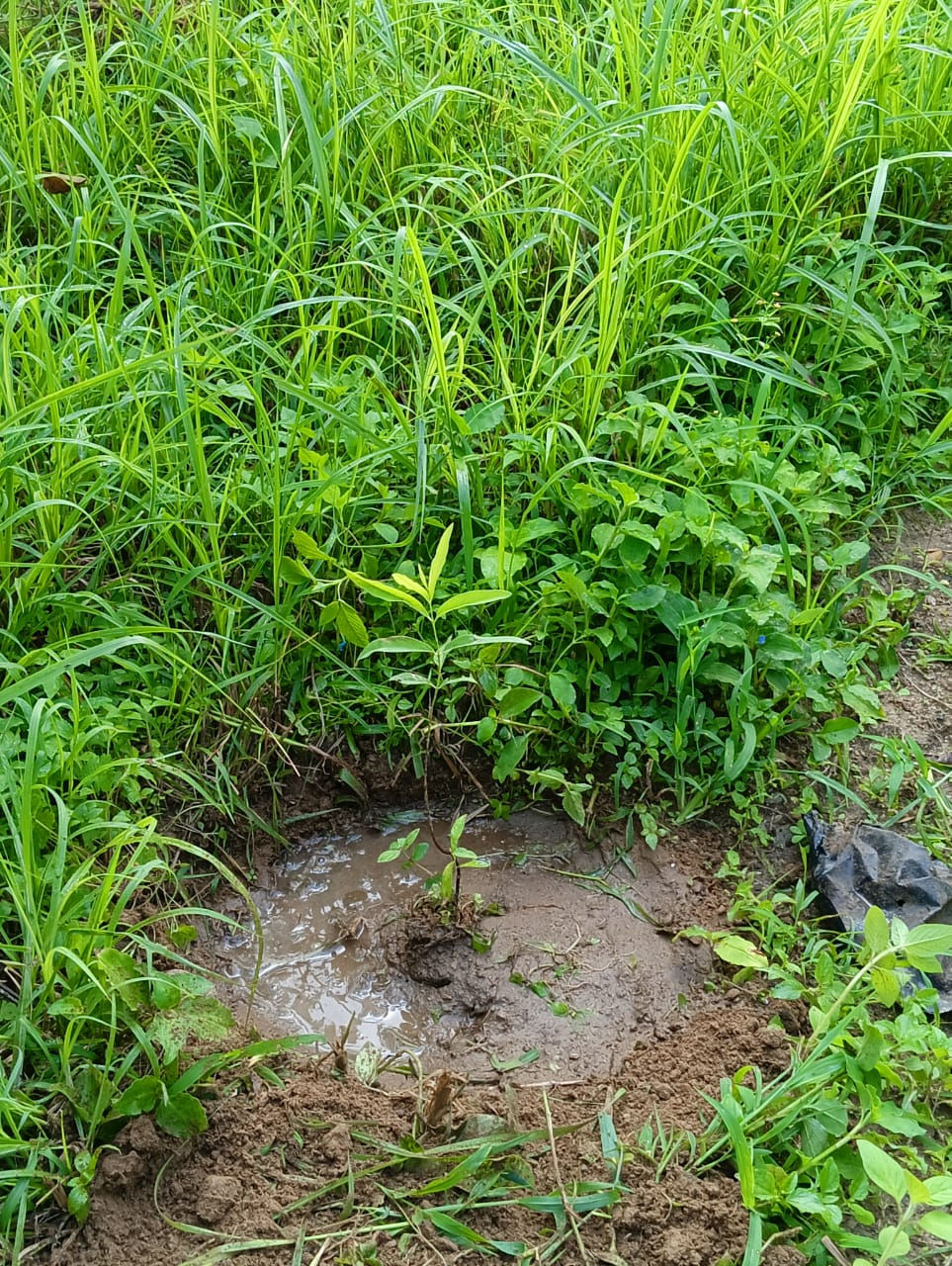
Activity - Soil Preparation, Site Survey
Images:
Phase 2 - Plantation Drive
Activity - Community and Volunteer Engagement
Images:-
Phase 3 - Post Plantation
Activity - Watering, Guard Installation, Monitoring
Images:
Testimonials :
Glimpse of 500 Trees Planted in Aravalli Hills: A Collaborative Effort for Environmental Restoration :
Progress Summary
500 trees planted across selected degraded sites of Aravalli Hills.
100% saplings survived the initial 2 months (based on early March monitoring).
Regular watering and guards were installed to prevent grazing.
Community volunteers involved for site monitoring and care.
Impact on Delhi NCR Environment
Trees planted act as carbon sinks, reducing PM 2.5 and PM 10 particles.
Increased green cover to tackle urban heat island effect.
Improved biodiversity and pollinator return.
Groundwater recharge aided through species like Semal and Bargad.
Research Support
[TERI Report on Aravalli Forest Depletion & Delhi NCR Air Quality] https://www.teriin.org/article/aravallis-natural-shield-delhi
[DownToEarth: Native trees & pollution control] https://www.downtoearth.org.in/news/air/native-tree-species-best-way-to-combat-pollution-66193
[CSE: How Aravalli afforestation can combat desertification] https://www.cseindia.org/aravallis-the-forgotten-shield-9632
Conclusion
The collaboration has laid a strong foundation for green revival in Aravalli Hills, ensuring Delhi NCR breathes better.


Comments